
My 2-Year-Old Isn’t Talking Yet: Should I Be Worried?
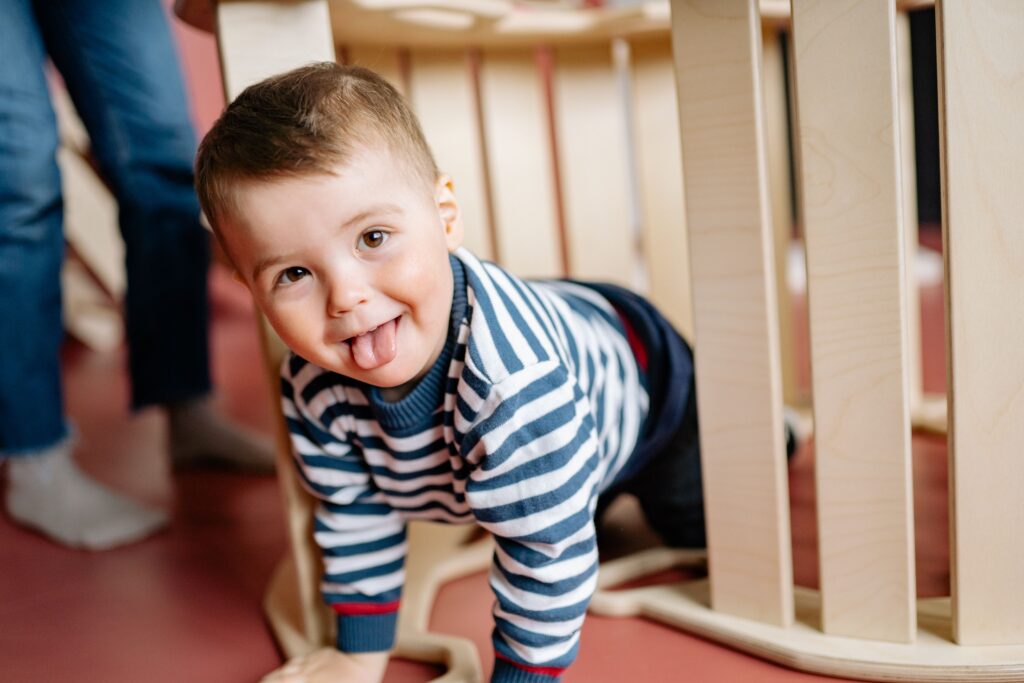

If your 2-year-old isn’t talking yet or isn’t using as many words as you expected, you’ve probably heard a lot of different advice.
“Just wait. They’ll talk when they’re ready.”
“Boys talk later.”
“My child didn’t talk until they were three, and they’re fine.”
And, of course, there’s ChatGPT, where a quick search can turn into a long list of milestones, diagnoses, and reasons to worry.
So, should you be concerned?
The answer isn’t always a simple yes or no. But if you have questions about your child’s communication, you don’t have to wait until you have all the answers to ask for help.
Communication Is About More Than How Many Words Your Child Says
When we think about speech development, it’s easy to focus on words: How many does my child have? Are they putting two words together? Are they saying as much as other children their age?
Those things matter. But communication starts long before, and extends far beyond, spoken words.
A child may communicate by:
- Bringing you something they need help with
- Reaching, pointing, or gesturing
- Looking toward something they want
- Taking your hand and leading you somewhere
- Making sounds or using words
- Sharing an experience with you in their own way
At Kid PT, we believe the goal isn’t simply to get a child to talk. The goal is to help each child communicate effectively and confidently in the ways that work for them.
Learn more about Speech Therapy at Kid PT
Why Might a 2-Year-Old Not Be Talking Yet?
There isn’t one answer.
Some children are simply developing spoken language on a different timeline. For others, delayed speech may be one piece of a broader difference in how they’re developing.
A speech-language pathologist may look at much more than the number of words your child uses. They may consider:
- What your child understands
- How they communicate wants, needs, and ideas
- How they interact and play with others
- The sounds they make and how they use them
- How easily they imitate sounds, words, or movements
- How they coordinate the movements needed for speech
- How they respond to and process language
And sometimes, what we’re seeing isn’t only about speech.
Speech Doesn’t Develop in a Bubble
This is where looking at the whole child becomes important.
Talking is an incredibly complex skill. A child has to take in information from the world around them, understand language, develop an idea, plan a response, coordinate incredibly precise movements of the mouth, and regulate their body enough to do all of that—often while playing, moving, listening, and interacting with another person.
That’s a lot happening at once!
For some children, sensory processing, motor planning, regulation, attention, play skills, or overall development may be part of the picture.
That doesn’t mean every child with a speech delay needs physical therapy or occupational therapy.
It means development is connected.
At Kid PT, our physical, occupational, and speech therapists collaborate so that when there are questions beyond one therapist’s area of expertise, we can look at those questions together. Sometimes speech therapy is exactly what a child needs. Sometimes another therapist notices an additional piece of the puzzle. And sometimes we can reassure a family that we’re not seeing concerns in another area.
Learn more about Kid PT’s collaborative pediatric therapy approach
What If My Child Understands Everything but Isn’t Talking?
Parents tell us this all the time:
“I know they understand me. They just aren’t talking.”
And that’s important information.
What a child can say is not necessarily a reflection of what they understand.
Some children understand significantly more language than they can express. Others may know exactly what they want to communicate but have difficulty producing the motor response needed to say it. And some children communicate effectively without relying primarily on spoken language.
We never want to underestimate a child’s understanding or abilities simply because they aren’t speaking—or because they aren’t looking directly at us when we’re talking to them.
We presume capability while we work to understand how each individual child takes in information and communicates.
So, When Should You Ask for Help?
You don’t need to wait until you’re certain something is wrong.
If you’re wondering about your child’s speech or communication, that’s enough reason to ask the question.
An evaluation doesn’t automatically mean your child needs ongoing therapy. It gives you more information about how your child is communicating now, where their strengths are, and whether there are areas where some additional support could help.
And if you’re noticing more than speech—maybe differences with play, movement, eating, sensory experiences, or regulation—you don’t have to figure out which type of therapist to call first.
Bring us what you’re seeing. We can help you figure out the next step.
Early Intervention, Private Speech Therapy—or Both?
If your child is under 3, Early Intervention can be a valuable resource, and we often encourage families to explore it. It gives children support within their everyday routines and helps parents learn strategies they can use throughout the day.
But Early Intervention isn’t your only option—and for some toddlers, the home environment isn’t always the easiest place to build new skills.
Home is familiar and predictable. Your child knows their favorite toys, their routines, where everything is, and how they typically get their needs met. That’s one of the strengths of home-based therapy, but sometimes that familiarity can also make it harder to create the novelty and just-right challenge that encourages a child to try something new.
A clinic environment offers something different.
At Kid PT, we can intentionally create new opportunities for your child to communicate, play, move, problem-solve, and interact. We can change the environment, introduce motivating activities, and adjust the challenge moment by moment—while keeping your child engaged, regulated, and successful.
For some toddlers, being in a different environment with a therapist, new activities, and new reasons to communicate can open up opportunities that aren’t happening as easily at home.
There’s another important difference in how we approach a child who isn’t talking yet: we aren’t only asking whether your child meets criteria for a speech delay. We want to understand why communication is difficult for this particular child.
How are they already communicating? What do they understand? What are they trying to tell us? What makes communication easier or harder? How do they play and interact? How easily do they imitate and plan movements? Are sensory, motor, feeding, or regulation differences part of the picture? And what strengths can we build on?
Sometimes speech therapy is exactly what a child needs. Sometimes our speech therapist sees something that would benefit from the perspective of one of our occupational or physical therapists. Because our PT, OT, Speech, and Feeding therapists work together, we can put those pieces together rather than looking at each area of development in isolation.
And it doesn’t have to be an either/or decision.
Some children benefit from Early Intervention and private therapy because the two settings offer different opportunities: support within familiar everyday routines at home, along with new experiences and intentionally designed challenges in the clinic.
The goal isn’t to choose one system over another. It’s to figure out what combination of support will help your individual child communicate, learn, and participate more fully.
You Don’t Need to Know What Your Child Needs Before You Call
That’s our job.
You don’t need to decide whether what you’re seeing is a speech delay, a motor-planning difference, a sensory issue, or simply your child’s individual developmental timeline. And you don’t need a diagnosis before reaching out.
Tell us what you’re noticing. We’ll listen, meet your child, and help you determine what—if anything—should happen next.
If you’re not sure whether an evaluation is the right next step, Kid PT offers a free Discovery Visit. It’s an opportunity to meet with one of our therapists, talk through your concerns, and decide together whether further evaluation or support makes sense.
Schedule a Free Discovery Visit →
Wondering About Your Child’s Speech?
If you’re in Raritan, Bridgewater, Hillsborough, or the surrounding Somerset County area and you’re wondering about your child’s communication, we’re happy to talk with you.
You don’t need to have the answers before you reach out. You bring us what you’re noticing. We’ll help you figure out where to go from there.