
What if We Give Children More Credit?
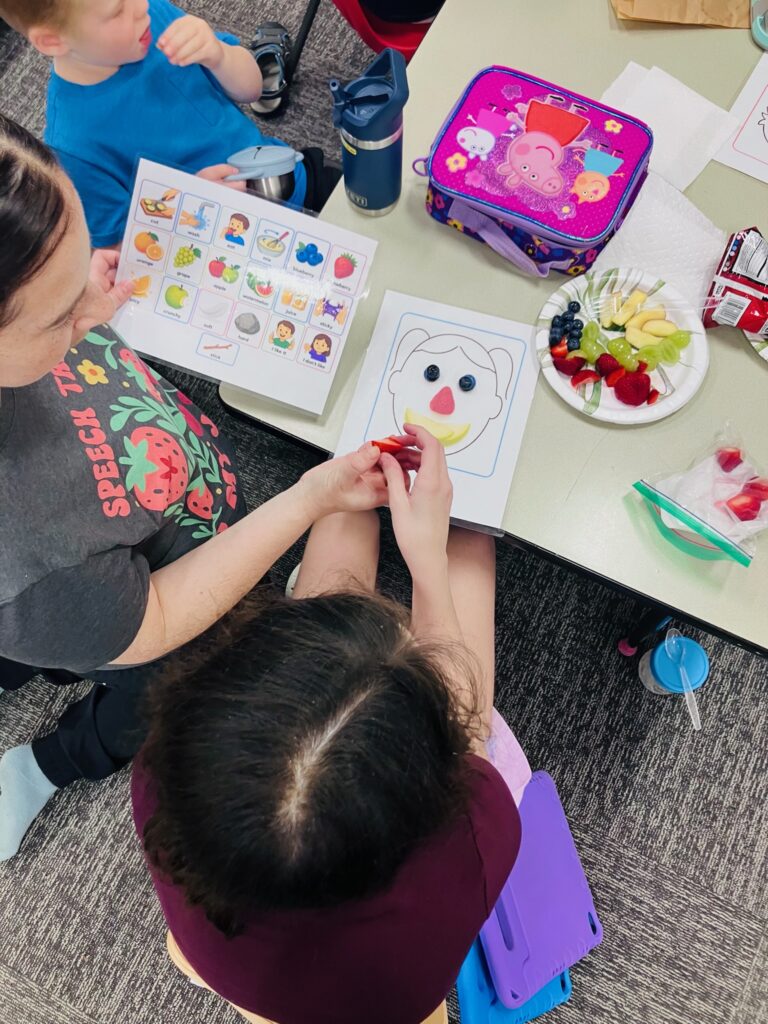

Recently we were sharing a post on our social media that got a lot of attention. A few comments came through saying that we should be only using play to expand a child’s food preferences and abilities.
Let’s talk about that.
I disagree with the idea that play should be the only way we support children’s learning. Not because I question the value of play, but because I believe we can do even more within and beyond play: invite children to become active collaborators in their own development.
This belief is rooted in my values as a pediatric physical therapist, the philosophy we’ve built at Kid PT, and the principles of neuroaffirming care.
Play is a powerful teaching tool. We use it everyday with every child at KidPT.
During play our goal is to support a child to expand their skills. During play, we are looking for them to feel safe and regulated so they can choose to expand their experience outside of their comfort zone.
This may mean to taste a new food, or climb a new jungle gym, or write a story.
One thing we want children to have, and to feel that they have, is agency. That they have a choice in what is happening to their bodies and how they interact with the world.
A child needs to have agency to build self-advocacy skills.
Our goal in therapy is to not just achieve the goals we created for that specific plan of care. I like to think about the next year, 5 years in the future, 10 years in the future, and beyond.
I don’t just want to know what works to help the child. Whether that is to smell a new food to become more comfortable with it, to step onto a one inch step before stepping onto a curb, or to draw a line in shaving cream before writing a letter on paper.
I want the child to experience success. Some children will experience success more easily when we use visual supports, sometimes when we improve sensory awareness, and sometimes when we build their confidence that they can do hard things.
I want the child to know what helps them try new things.
Whenever possible, I want to engage the child in the process of discovery.
I don’t want to do an intervention “to them.”
I want to collaborate with the child to learn what things help and what things don’t.
I have often told parents that I want to shift the child’s experience from ”I can’t” to “I can.” When the child is stuck in “I can’ts,” they try something, it fails, and in response they either give up, or just do things the way they’ve always done it, which may be a way that will cause a problem in the long run.
The shift to “I can” is when the child learns that they can try new things and then they spontaneously repeat these things over and over. This is where exponential growth comes! Sometimes, all it takes is lighting that first spark. Suddenly, a child who was hesitant to try something new begins exploring, experimenting, and practicing. That’s when learning can extend far beyond our therapy sessions.
While children can learn so much through their experiences, imagine what becomes possible when we also help them recognize why something worked. When we invite them into that discovery, we’re giving them tools they can use the next time they face a challenge.
This is especially important when we think about neuroaffirming care. Neurodivergent children may experience sensory information, movement, attention, and regulation differently from the adults supporting them. When we rely only on what we observe, we may misunderstand what a child is experiencing or what they actually need.
When we invite children into the process, in whatever ways they communicate, we’re recognizing that their experiences matter. We’re not simply trying to change what we see on the outside. We’re helping children discover what works for them on the inside. At the end of the day, empowering these kids to learn what works for them, can change their entire trajectory in life, let alone in school.
For example, we have been supporting children in the classroom with movement breaks, fidgets, and brain breaks for many years now. We understand that children need these things to help them learn.
We can put these strategies into place and observe what happens.
The alternative, and collaborative, approach, is that we involve children in the process. We talk to them about what we’re observing and ask them their thoughts. We offer solutions and see if they have their own ideas. We then try a strategy, such as using a fidget. Afterwards, we talk to the child about how it impacted them.
Collaboration doesn’t have to involve a complex conversation. It can happen with children who don’t communicate through spoken language, too.
For example, a therapist might say, “I notice you’re moving around a lot in your chair. Let’s see if this fidget feels helpful.”
After some time, the therapist might share, “I notice you’re sitting in your chair longer. It looks easier for you.”
The child doesn’t need to answer verbally. We can observe how they respond, offer opportunities to continue or stop using the fidget, and recognize their gestures, movements, facial expressions, or other forms of communication.
We’re making the child part of the process rather than simply deciding for them.
We can make it more complex or we can make it more simple, but most importantly, we are bringing collaboration into the process. The ability to participate in collaboration should never be confused with the ability to have a verbal conversation.
Engaging children in this collaborative process can help them recognize what they need, develop self-regulation and self-advocacy skills, and participate more actively in finding solutions, with whatever support they need along the way.
What a gift that is to children, simply by shifting our approach!
Do we still incorporate play into all of our sessions? Absolutely.
Do we use visual, tactile, and auditory cues to support children’s learning? Absolutely.
Do we use sensory exploration to support children’s interoceptive awareness, spatial awareness, and body awareness? Absolutely.
And is there a one size fits all approach when it comes to supporting children’s development? Absolutely not.
At Kid PT, we want children to experience success and feel empowered by it. But we also want them to understand what helps make that success possible.
We believe in play, individualized support, agency, and self-advocacy. And we believe children deserve to be active participants in their own development, in whatever ways they can communicate and participate.
Because giving children more credit isn’t just about believing in what they can accomplish. It’s about recognizing what they can contribute to the process of getting there.