
Low-Pressure Feeding Therapy Strategies for Picky Eaters

If your child struggles with picky eating, the goal doesn’t have to be “just take a bite.” Our feeding therapist, Kira, put together her top suggestions to help families struggling with this common problem.
In feeding therapy, we focus on food exploration before eating, because curiosity and regulation come before tasting. When kids feel safe and in control, they are far more likely to expand their food choices over time.
These low-pressure feeding therapy strategies help picky eaters explore food in ways that feel playful, achievable, and stress-free.
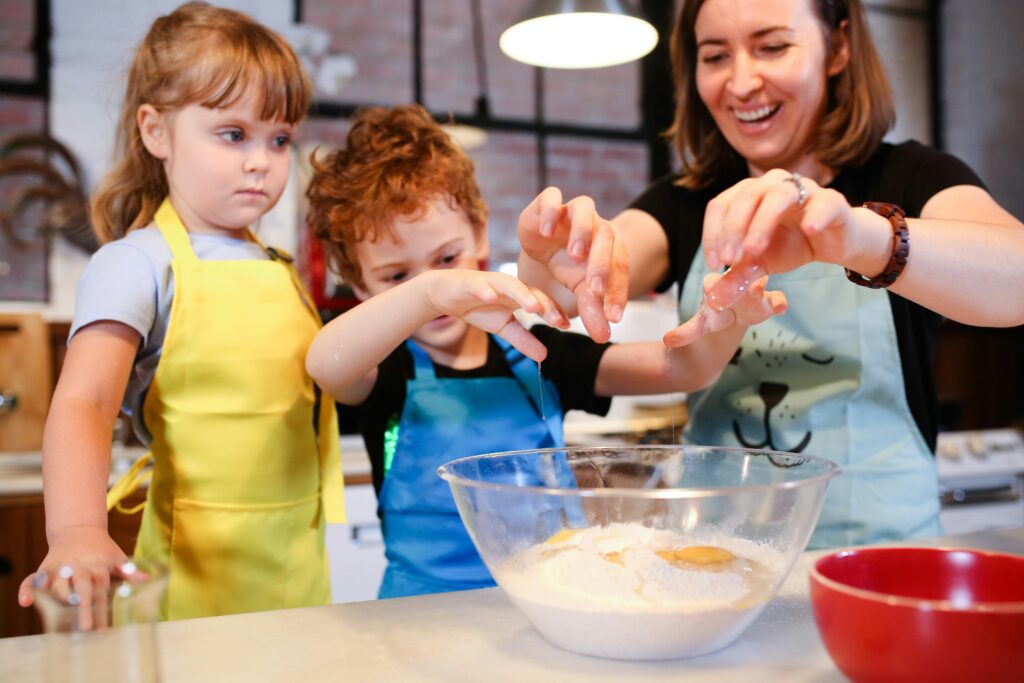
1. Get Kids Involved in the Kitchen
Children are much more likely to explore foods they help prepare. Participation builds familiarity and reduces anxiety around new foods.
Invite your child to:
- Cut soft foods with a child-safe knife
- Pour ingredients
- Mix batter
- Arrange fruit or vegetables on a plate
- Create patterns or designs
Even if they never take a bite, interaction builds comfort.
2. Make Silly Vegetable Faces
Turn food into art. Create:
- Carrot smiles
- Cucumber eyes
- Pepper eyebrows
No pressure to eat. You can model tasting, but the goal is fun and connection. Laughter lowers stress—and lower stress supports appetite.
3. Hold a “Crunch Contest”
Crunchy foods provide strong sensory feedback, which many kids enjoy.
Try offering:
- Carrots
- Bell peppers
- Cucumbers
- Snap peas
If needed, include familiar crunchy foods (pretzels or crackers) to reduce pressure and support participation. See who can make the loudest crunch. Keep it light and playful.
4. Blend Smoothies Together
Smoothies allow children to explore new fruits and vegetables through:
- Smell
- Color
- Texture
Let your child choose ingredients, scoop, pour, and press the blender button.
If your child is sensitive to sound, headphones can help. Smooth textures are often easier for hesitant eaters to tolerate than mixed textures.
5. Use Familiar and New Dips
Dips make new foods interactive and lower the stakes. Start small and allow finger exploration.
Let your child choose pairings:
| Food | Try With… |
|---|---|
| Carrot sticks | Hummus, ranch, peanut butter |
| Cucumber slices | Tzatziki, yogurt ranch |
| Bell peppers | Guacamole, cream cheese |
| Broccoli | Cheese sauce, hummus |
| Apple slices | Nut butter, honey |
| Banana slices | Chocolate-hazelnut spread |
| Strawberries | Yogurt |
| Pretzels | Cheese dip, hummus |
| Crackers | Cream cheese, guacamole |
| Pita chips | Hummus, tzatziki |
| Chicken nuggets | Ketchup, honey mustard, ranch |
| Mini meatballs | Marinara, BBQ sauce |
| Tofu cubes | Soy sauce, peanut sauce |
Choice builds confidence. Confidence builds flexibility.
6. Become Food Scientists
Turn mealtime into an experiment. Invite your child to describe:
- Colors
- Shapes
- Temperatures
- Smells
- Textures
Use playful descriptive words like:
- Squishy
- Crunchy
- Slippery
- Sticky
- Crumbly
Curiosity lowers pressure. And pressure is often the biggest barrier for picky eaters.
Why Low-Pressure Feeding Works
When children feel calm and supported, their nervous system can shift into “rest and digest” mode. That’s when appetite and exploration naturally increase.
Feeding therapy isn’t about forcing bites. It’s about:
- Regulation
- Safety
- Connection
- Gradual exposure
Progress may look like touching a new food today and tasting it months later—and that’s okay.
Final Thoughts
Expanding food variety takes time. The goal isn’t perfection—it’s building a positive relationship with food.
If picky eating feels overwhelming or stuck, you don’t have to navigate it alone.
Our feeding specialist offers individualized feeding therapy to support your child’s sensory needs, motor skills, and nervous system regulation.
We also offer our Food Explorers group, where children practice expanding foods alongside peers in a playful, supportive environment. Eating with other kids often increases curiosity and confidence in ways that feel natural and motivating.
👉 Request a free discovery visit with our feeding specialist to learn more about individual therapy or our Food Explorers group.